

Reading, imagining, building the Amazon we want
Grandparents say that if we repeat a story many times, it has the power to conjure reality, allowing us to re-narrate the present and build the world we dream of..
We are a community children's library
We are a community children’s library located in Huaticocha, Orellana, in the northern Amazon region of Ecuador. We were founded with the purpose of inspiring Amazonian children with a love for the Amazon and for reading. We seek to create spaces for reflection and dialogue to imagine and build their own history, different from the one they have been told about the rural Amazon.
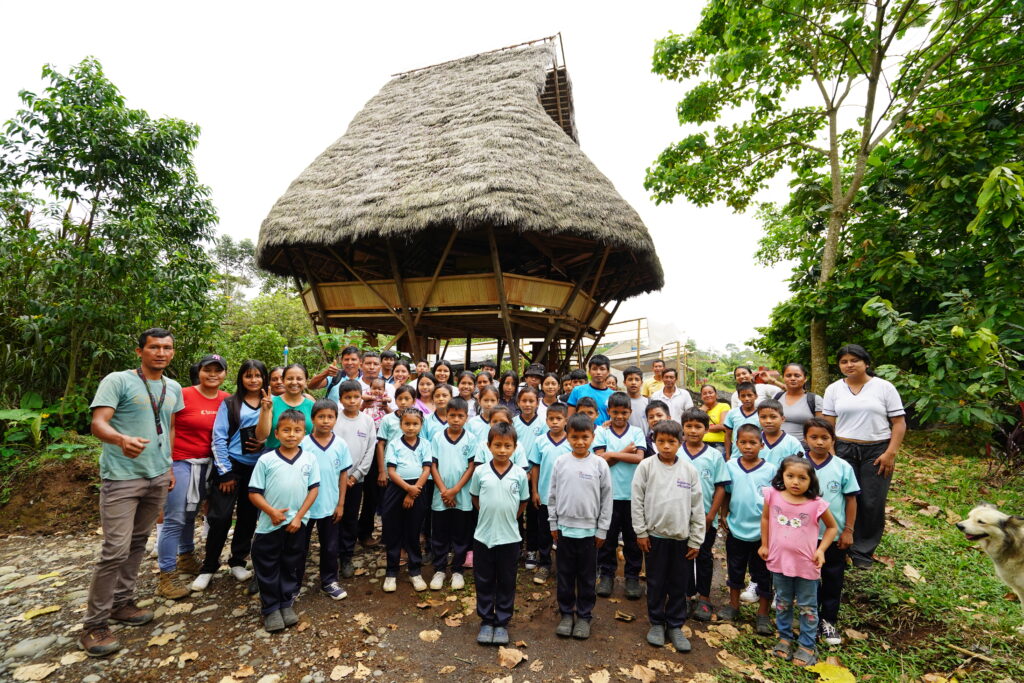
The library is a safe space to meet, read, imagine and recognize ourselves as part of a diverse and wonderful ecosystem. Hoping that from these encounters we can re-narrate the history we lived in the indigenous and peasant rurality of the northern Amazon, and contribute to building a brighter, more regenerative and proud history of who we are.
Throughout 2020, we began meeting informally with the children of Witoca’s members and neighbors. At first, we met informally once or twice a week to read, paint, and play. Sometimes we gathered under the guava or mandarin trees, or on the terrace where the women of the association selected the coffee. We shared books, games, and creative activities, while imagining new ways to learn together..
Over time, the need arose for a larger, permanent space where we could comfortably meet to read, learn, dream, and grow. So, in January 2024, we inaugurated our new home, along with our programs and methodologies..
Building a library with Amazonian architecture!
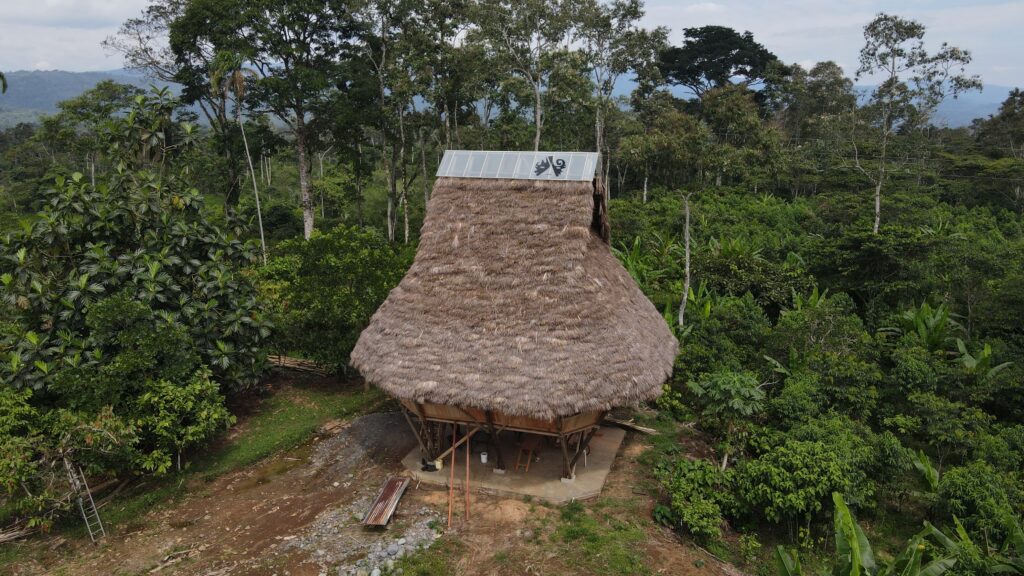
The library emerged from a collaborative co-design process, bringing together the experiences of Kichwa and mestizo community members and farmers, architects from Alborde, engineers, Sarawarmi Creative Lab, and local roofers. It was a collective learning experience that led us to explore the possibilities of Amazonian vernacular architecture on a scale our organization had not previously addressed. The architectural and engineering design was handled by Alborde, while the construction was carried out by Witoca under Alborde’s guidance.
The hut incorporated chonta wood, one of the hardest and most resistant woods in the forest. Although moving 14-meter-long chonta wood without machinery was a challenge, as was collecting and weaving 340 m² of roofing with toquilla straw, creating joints for wooden structures 14 meters high presented an interesting challenge..
We also learned to interpret architectural designs, coordinate remote work, and communicate between visits, sharing different knowledge and ways of building. La Casa Grande is much more than a building: it is the result of a collective effort..
In a region where children and young people face barriers to accessing educational and cultural opportunities, having spaces to read, create, explore and share can open up new possibilities.
We believe that literature and art allow us to discover other perspectives, recognize the value of our own history, and develop tools to understand and transform the world. We want Amazonian children to find new questions, role models, and ideas in books, while continuing to value the knowledge of their families and communities.
Kids' Club
Reading

A reading, art and exploration program for girls and boys aged 7 to 13 from the Huaticocha parish and the 24 de Mayo commune.
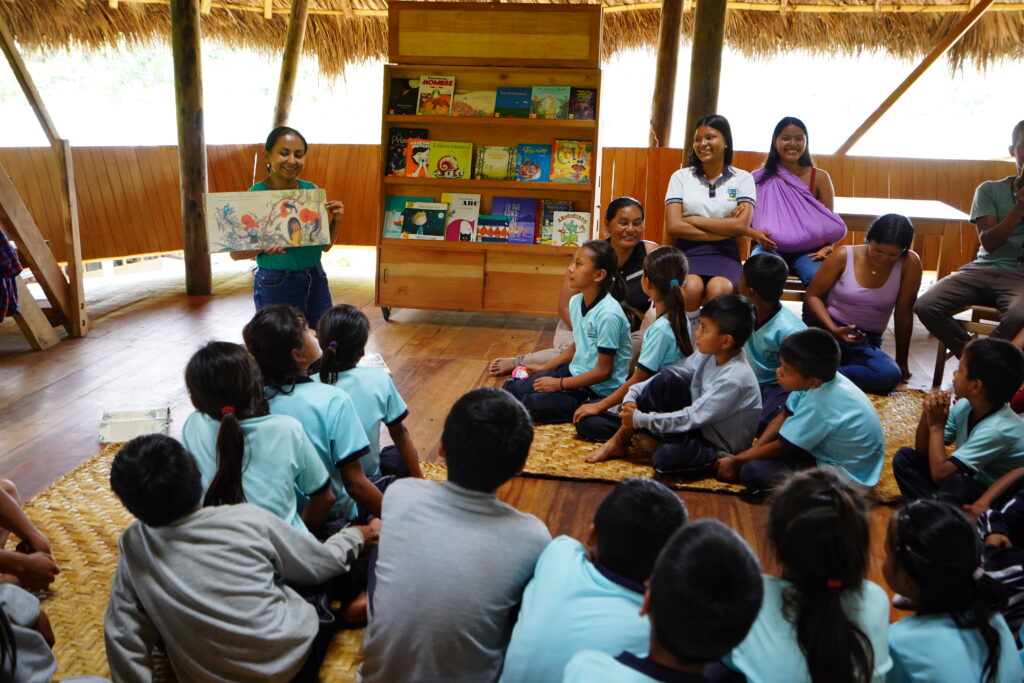
Huaticocha Lee is a non-formal education program that complements school learning through its own methodology, integrating reading mediation, arts, cooking, play, and environmental education. It aims to foster a love of reading and strengthen creativity, curiosity, listening skills, confidence, and critical thinking.
How do we work? – our methodology
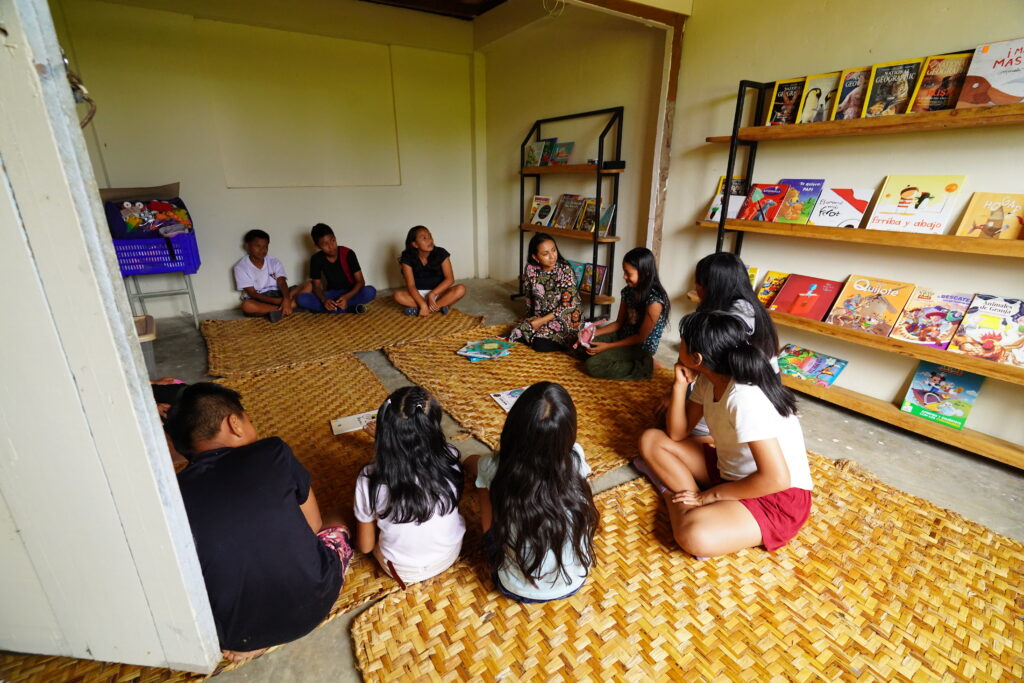
The club has a structure of meetings that combines different moments of learning and exploration:
- Independent reading: Each participant explores the books according to their interests, develops their preferences, and builds their own relationship with reading.
- Read aloud: We share stories that spark the imagination, raise questions, and generate conversations.
- Game and encounter: We incorporate playful dynamics that promote participation, listening, and collective learning.
- Shared snack: We create a moment to meet, talk, and strengthen the bonds between participants.
- Creative experiences: We carry out plastic arts and creative activities that allow us to explore ideas, express emotions and give new forms to stories.
What do we explore?
Our methodology connects books with everyday life and local knowledge. We work in different areas that complement each other:
- Literature and oral storytelling: picture books, stories, shared reading and story creation.
- Art and creativity: painting, experimentation with materials and artistic expression.
- Play and thought: Playful activities that stimulate imagination, curiosity, and question-solving.
- Amazonia and environmental education: exploration of biodiversity, the forest and the relationships between living beings.
- Agriculture and family knowledge: approach to the knowledge of the families and the productive activities of the area, including the cultivation of Robusta coffee.
What are we looking for?
In the long term, we hope that providing time and access to books and their stories will create intergalactic readers who are able to read, feel confident in expressing their ideas, learn to listen and ask questions, and discover new ways of understanding their environment.
The reading club goes beyond developing reading skills: it proposes educational experiences that connect literature, art and knowledge of the Amazon, so that each participant can learn from their curiosity, their imagination and their own reality.
Memory Girls Club

A safe space to get to know each other, express ourselves and grow together.
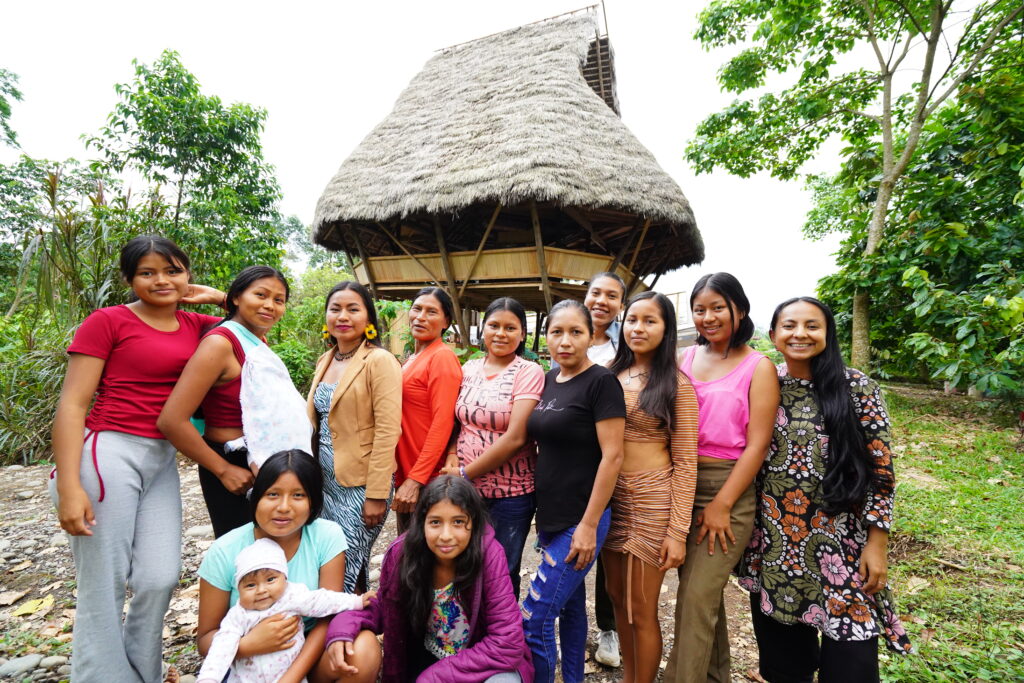
The Yuyarina Girls’ Club is a meeting place for girls and teenagers going through a stage of great change, questions, and discoveries. Through reading, art, conversation, and collective reflection, we create a space where they can speak freely, express their feelings, share their concerns, and ask questions they often don’t dare to ask in other settings.
We talked about menstruation, bodily changes, feelings, relationships, personal boundaries, and different ways to care for and protect ourselves. We are interested in both body awareness and health care, as well as emotional well-being: learning to recognize what we feel, identifying situations that make us uncomfortable, expressing our needs, and building relationships based on respect and trust.
How do we work?
Each meeting proposes a theme to explore together, with participatory activities that combine reading, artistic expression, conversation, and reflection. We don’t aim to provide all the answers, but rather to create the conditions for each girl to ask questions, share her experiences, listen to other perspectives, and develop her own judgment.
Body and menstruation: We learn about the changes we experience during adolescence and open conversations about menstruation, self-care, and our relationship with our bodies.
Emotions and well-being: We explore what we feel, learn to recognize and express our emotions, and discover ways to take care of ourselves on the inside as well.
Care, protection, and boundaries: We talked about respect, trust, personal boundaries, relationships, and how to recognize situations where we need support or protection.
Reading and critical thinking: We use books, stories, and questions to challenge ideas, broaden perspectives, and build our own opinions about ourselves and the world.
Art and personal expression: We draw, write, create and explore different ways of expressing what is sometimes difficult to put into words.
Circles of trust: We build agreements for coexistence and practice listening without mockery or judgment, so that each participant can feel welcomed and respected.
What are we looking for?
In a context where economic inequalities and violence limit the opportunities and well-being of many girls and adolescents, we believe it is essential to have accessible spaces for listening and support. We want the Yuyarina Girls’ Club to be a source of support in their lives: a place where they can talk, share their concerns, strengthen their networks of trust, and recognize that they are not alone as they discover their abilities and build their own life plans.
Bebeteca Memorial Time
Reading, playing and discovering the world from the womb.
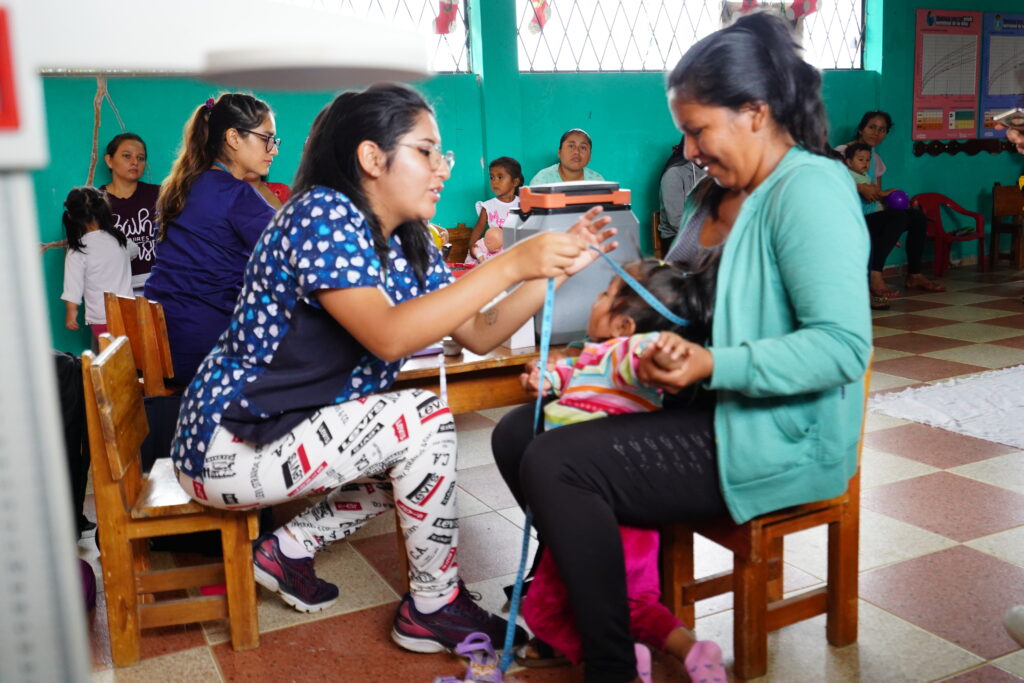
The Yuyarina Pacha Baby Library is a reading mediation and support program for pregnant women and young children. It introduces books, stories, music, and play to children from their earliest years, promoting experiences that strengthen emotional bonds and foster the discovery of the world through reading.
Through training sessions and practical experiences, we share reading mediation tools and explore new ways of integrating books, storytelling, and play into the daily activities of early childhood.
This work is complemented by Yuyarina Pacha’s commitment as a welcoming and exploratory space. We have a collection of books specially selected for this stage, including board books, cloth books, and other formats that invite children to look, touch, listen, and discover. In addition, the library has a corner dedicated to early childhood, where children can engage with books at their own pace, accompanied by their families and caregivers.
How do we work?
- Training and support for educators: We developed training sessions to strengthen the tools of the CNH mediators, exchange experiences and incorporate reading and play into their processes of supporting early childhood.
- Books and materials to explore: We bring together cardboard books, cloth books, illustrated books and other materials suitable for early ages, which allow children to discover stories through their senses.
- A dedicated space in the library: We offer a corner of the Baby Library at Yuyarina Pacha so that girls and boys can encounter books in a welcoming, safe environment designed for exploration.
- Reading, music and play: We propose experiences with stories, songs, words, movement and sensory activities that stimulate curiosity and different forms of expression.
- Links with families and the community: We promote the participation of mothers, fathers and caregivers, recognizing their role in supporting early reading experiences.
What are we looking for?
We aim to make reading a part of life from the earliest years and to provide families and educators with the resources and tools to share it with children. We want to strengthen the skills of community facilitators, expand access to books and materials suitable for early childhood, and make Yuyarina Pacha a place where babies, children, and caregivers can meet, explore, and enjoy books.
We believe that fostering a love of reading from the earliest years is a shared responsibility. That’s why we combine training for those who work with young children with the availability of materials and a community space that encourages reading, playing, and discovering together.
Oraloteca, strategies for reading the forest

A library that can also be read with the ears.
The Oraloteca was born from Yuyarina Pacha’s quest to build a library rooted in the Amazon, one that recognizes the many ways of learning, narrating, and transmitting knowledge. Because the wisdom of a territory isn’t only found in books: it also lives in the voices of elders, in the stories shared within families, and in the tales that connect communities to the forest.
Through digital listening devices, the Oral Library allows users to access recorded stories and discover other ways of understanding and imagining the Amazon. It is a space where oral tradition finds its place within the library and where voices can accompany new generations in discovering the stories of their territory.
Our first collection: the Supays of the forest
The first collection of the Oraloteca brings together recorded stories about the supaysThese stories, which explore beings or spirits linked to the forest in Amazonian narratives, invite us to listen to other ways of understanding and relating to the rainforest, and introduce children and visitors to the imaginaries and stories that form part of the oral tradition of the region.
A collection that will continue to grow
The Oral Library is a work in progress. In the future, we want to expand the collection with new stories, narratives, and voices that we gather from communities, especially from older people, bearers of memories and knowledge that deserve to be heard and shared with new generations.
At Yuyarina Pacha, we believe that an Amazonian library must also listen to its territory. That’s why, in addition to opening its doors to books, we want to create space for the voices, memories, and stories that keep the knowledge of the Amazon alive.
Oraloteca, strategies for reading the forest
Reading that moves, communities that create.
Wawa Yuyarina is an initiative launched by Yuyarina Pacha to bring books and reading mediation experiences to children in other Amazonian communities. It is built in collaboration with a network of community educators in Napo, Orellana, and Sucumbíos, recognizing their role in the daily support of young children.
The initiative aims to bring together books, educational materials, training, and creative experiences to expand reading opportunities in local communities. Its proposal combines the development of a mobile library with the empowerment of educators as reading facilitators, so that stories can reach more children and become an integral part of community life.
1. A library that reaches the communities
Wawa Yuyarina envisions a mobile library that will bring books and reading, play, and creative materials to various educational and community spaces. The aim is to bring cultural resources to places where access to libraries and children’s collections may be limited, creating new opportunities to read, imagine, explore, and create.
2. A network of educators that multiplies the experiences
Community educators are key players in this initiative. Their close relationship with the children and their families allows reading experiences to connect with the daily life of each community.
Through collaborative work and the exchange of tools and experiences in reading mediation, we seek to strengthen their abilities to incorporate books, stories, and play in the spaces where they accompany early childhood.
What are we looking for?
- Expanding access to books and reading experiences for girls and boys in Amazonian communities.
- Strengthening the reading mediation tools of community educators.
- Promote reading, play and creative experiences linked to the environment and local knowledge.
- Connecting communities and educators to share learning and build new ways to bring reading closer to children.
A reading that travels and takes root
We believe that access to books shouldn’t depend on living near a library. When books travel, educators have more resources, and communities actively participate, reading can become a shared experience that sparks curiosity, strengthens bonds, and opens new possibilities for Amazonian children.
School visits and educational experiences
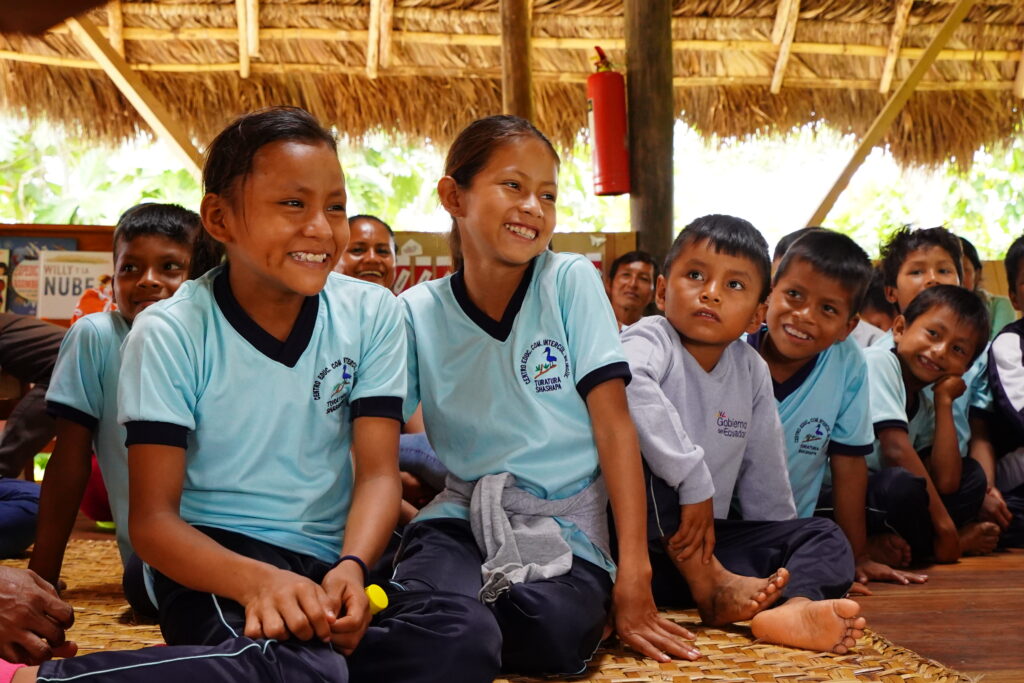
The library also serves as a meeting place for local educational institutions. We welcome school groups and strive to create experiences that complement classroom learning through books, the arts, and exploration.
Visits may include shared reading, library tours, games, creative activities, and experiences related to nature and life in the Amazon.
We are interested in building sustained relationships with teachers and educational communities, so that the library is a readily available resource and a place where children and young people can return to discover new books, develop questions and share learning.