

Everything that comes out of the chakra must return to it.
Biofábrica
Witoca
At Witoca, we believe that everything that comes from the garden must return to it. The fruits we harvest feed our families, become quality food, and generate opportunities for our community. But they also leave behind residues that can become life for the soil that made them possible.
That’s why at Witoca we have a dedicated space for producing organic fertilizers from coffee and cacao production waste. We want to make the most of what we have available to return nutrients to the soil, improve its fertility, and reduce our dependence on external inputs.
We seek to combine the ancestral knowledge of our farmers with tools and technologies that allow us to better understand the processes and obtain concrete results in our crops.
Building agricultural sovereignty means learning to produce our own inputs, restoring the fertility of our soils, and developing the capacity to feed our crops without permanently depending on products from abroad. It is a path that requires time, experimentation, resources and, above all, the willingness to question the forms of production that we have learned to consider normal.
We still have much to learn on this path. We continue to search for new recipes for making fertilizers and bio-inputs and refining them. Understanding their impact on the soil and farm productivity is the most important challenge. And for that, we need to observe, measure, experiment, and share what we learn with other producers.
This challenge is also cultural and political.
For decades, conventional agriculture has conditioned us to rely on synthetic fertilizers and pesticides as the standard solution to crop problems. Many of these products serve specific functions, but their misuse can affect human health, soil organisms, water, and other forms of life. Their effects don’t simply disappear because they’ve become part of our agricultural routine.
For us, the chakra cannot remain a romanticized idea about life in the Amazon. It has to be a productive, economic, and cultural reality. It must allow families to produce food, maintain their fertility, generate decent incomes, and preserve the conditions necessary to continue farming in the future.
We know the path ahead has its challenges and that there are no immediate solutions. But we also know that agricultural sovereignty begins when we stop seeing ourselves solely as buyers of inputs and start recognizing ourselves as producers capable of understanding, caring for, and regenerating our own agricultural systems.
Everything that comes from the chakra must return to it. Not as a slogan, but as a daily practice that allows us to produce food, regenerate the land, and reclaim our autonomy.
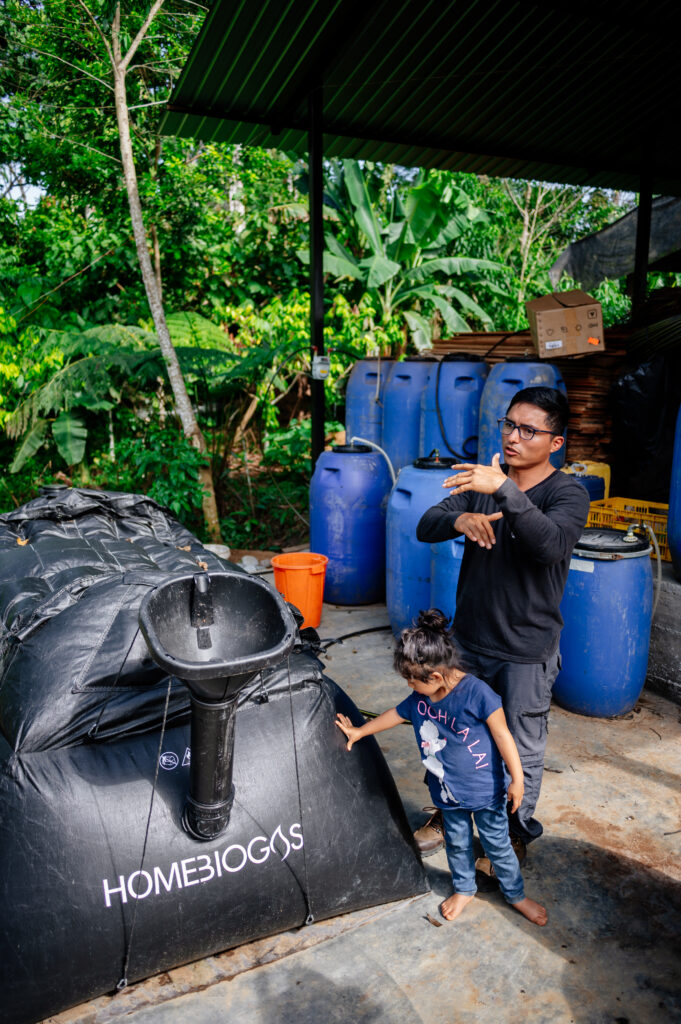
Specifically, our Biofactory produces:
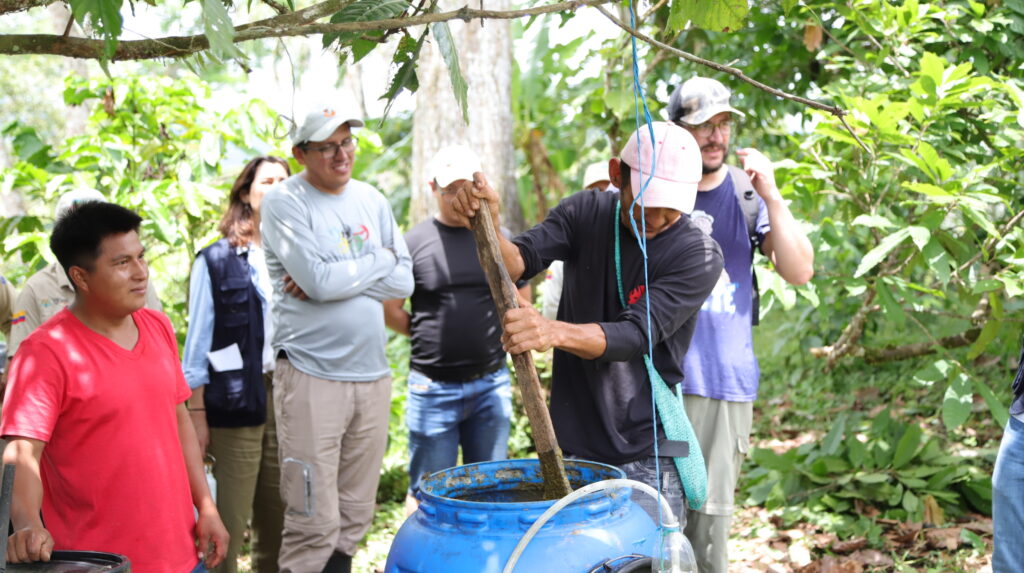
- Biol from Biodigester
- Fermentation tank bio-based products
- Chelates
- Cold and Hot Broths.
- Bocashi
- Phosphites
- Forest microorganisms.
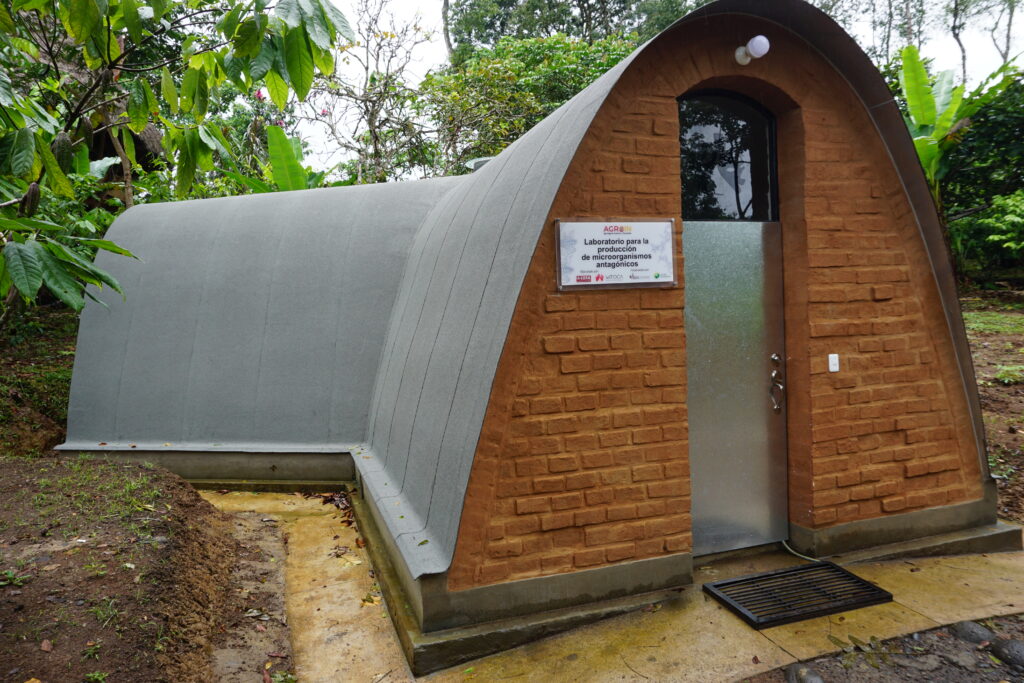
Laboratory of Entomopathogenic and Antagonistic Microorganisms for Biological Control
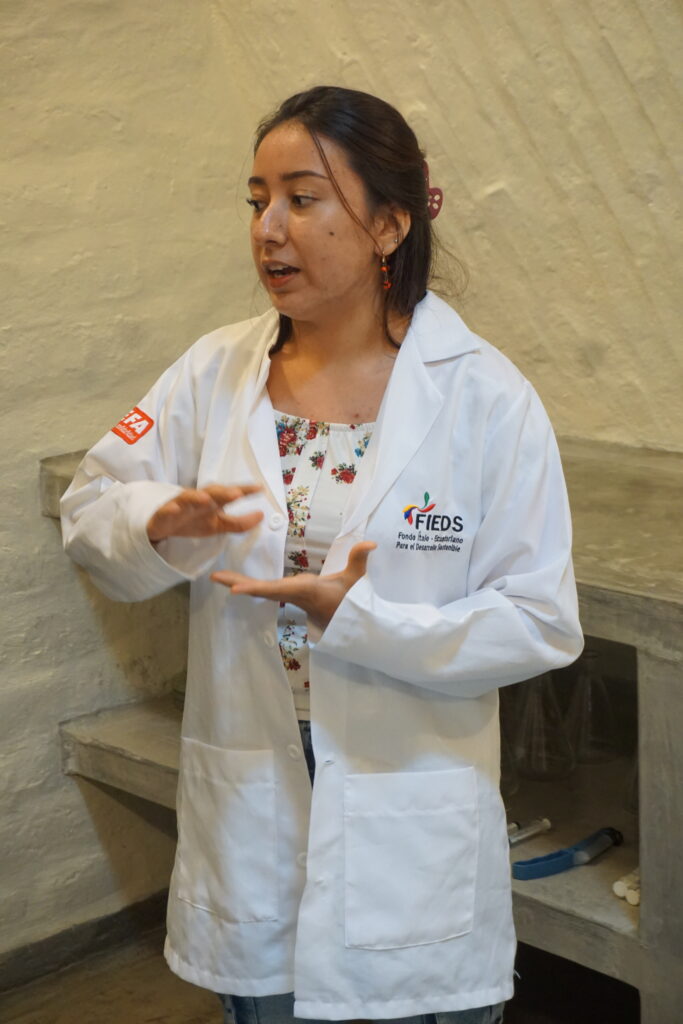
Robusta coffee and Nacional cacao face significant pest and disease problems that can severely impact crop productivity and quality. To address this challenge, at Witoca we have developed local capacities for the use and reproduction of beneficial microorganisms as biological management tools.
Our laboratory works primarily with Beauveria bassiana, an entomopathogenic fungus used for the control of insect pests such as the coffee berry borer (Hypothenemus hampei), and with Trichoderma spp…, used as a biological control agent primarily to control the proliferation of Moniliophthora roreri (Moniliasis) .
These technologies are part of an integrated pest and disease management approach, which seeks to reduce dependence on chemicals and strengthen the biological balance of production systems.
This process has been strengthened through joint work with INIAP and CEFA, institutions that have contributed to the transfer of knowledge and technologies related to phytosanitary management and the use of biocontrol agents. The collaboration with CEFA has allowed Witoca to strengthen its capabilities in the equipping, reproduction, and application of these technologies. This laboratory was designed and built with the support of ALONGSIDE architects.
At Witoca, we understand biological control not only as a tool to combat a pest, but as part of a broader transformation: restoring soil life, protecting biodiversity, and producing high-quality food in harmony with the rainforest..